
SEO checklist vs SEO action plan: understanding the difference
The terms SEO checklist and SEO action plan are often used interchangeably, but they serve different purposes. Understanding that difference can make your SEO work much more organised.
Both are useful, and both support better performance. The difference lies in how and when they are used. One helps you review your work. The other helps you plan it, and knowing where each one fits makes implementation much easier.
What an SEO checklist actually does
An SEO checklist works as a practical reference point. It helps you review whether important parts of your SEO work have been completed.
This becomes useful during content publishing, technical reviews, and ongoing optimisation. For example, before publishing a page, you may want to confirm:
• Is the title clear and optimised?
• Is the meta description written?
• Are internal links in place?
• Have images been compressed?
• Are headings structured correctly?
These checks reduce errors and improve consistency. They create a habit of reviewing details that can easily be forgotten. That is why the SEO Checklist is one of the most practical resources to keep close while working.
What an SEO action plan does differently
An action plan focuses on sequence and priorities, and it helps answer a different question. Instead of checking what is done, it helps decide what should happen next. This becomes especially valuable when starting SEO from scratch or when trying to improve an existing website.
For example, an action plan may begin with technical reviews, move into content improvements, then shift into internal linking, authority building, and performance tracking. This creates direction. Without that structure, many people jump between tasks without building momentum.
The 14-Day SEO Action Plan was created to make that process easier. Need more depth? See the full 30-day SEO action plan.
Before choosing which one to use, it helps to see the difference side by side. An SEO checklist is useful when you need to review the quality of your work. An SEO action plan is better when you need direction, priorities, and a clear sequence of tasks.
| Comparison point | SEO Checklist | SEO Action Plan |
|---|---|---|
| Main purpose | Helps you review whether important SEO tasks were completed. | Helps you decide what to do, when to do it, and in what order. |
| Best used for | Checking pages, audits, content updates, and technical reviews. | Planning SEO work over days, weeks, or months. |
| Focus | Quality control and consistency. | Direction, priorities, and execution. |
| Typical question | “Did I complete the important SEO steps?” | “What should I work on next?” |
| Useful when | You are publishing, reviewing, or improving a page. | You are starting SEO, organizing priorities, or improving a website systematically. |
| Example tasks | Check title tags, meta descriptions, headings, internal links, images, indexing, and analytics setup. | Review site health, improve key pages, update content, fix technical issues, strengthen internal links, and measure results. |
| Main benefit | Reduces missed details. | Reduces confusion and creates momentum. |
| Best result | More complete and consistent SEO implementation. | A clearer SEO workflow with measurable progress. |
Why the difference matters
Many SEO problems happen because people work without a clear system. They optimise pages without a broader strategy, or they create strategies without reviewing the quality of the implementation, and both create gaps.
An action plan gives your SEO work order, while a checklist gives it consistency. Together, they create a much stronger process.
A practical example
Imagine you want to improve a blog post. Your action plan might include reviewing search intent, expanding content depth, improving internal linking, updating metadata, and checking performance after publication.
Your checklist would help verify whether each part of that work was completed properly. The action plan shapes the process, and the checklist protects the quality of the execution. This distinction is simple, but powerful.
Which one should you start with?
That depends on where you are. If you are starting SEO and feel unsure where to begin, an action plan usually helps first. It creates focus and removes uncertainty. Not sure where you stand today? Start with an ActionSEO site audit before picking a plan.
If you are already publishing content or updating pages regularly, a checklist becomes valuable because it keeps your work organised and consistent. In most cases, using both creates the best results. One helps with direction. The other supports execution.
Why structure matters in SEO
SEO can become overwhelming when it feels like everything matters at once. Keywords, content, speed, links, technical settings, analytics, and indexing.
Without structure, it becomes difficult to prioritise. That is often where progress slows down. A structured process creates clarity, and it allows you to focus on one improvement at a time while keeping the bigger picture in view.
That is the thinking behind both the checklist and the action plan. And it is also the foundation behind SEO in Action, where the goal is to make SEO practical, measurable, and easier to apply over time. If you want to build your process step by step, start with the 14-Day SEO Action Plan and keep the SEO Checklist nearby as your working reference.
Related comparison: SEO checklist vs SEO audit.
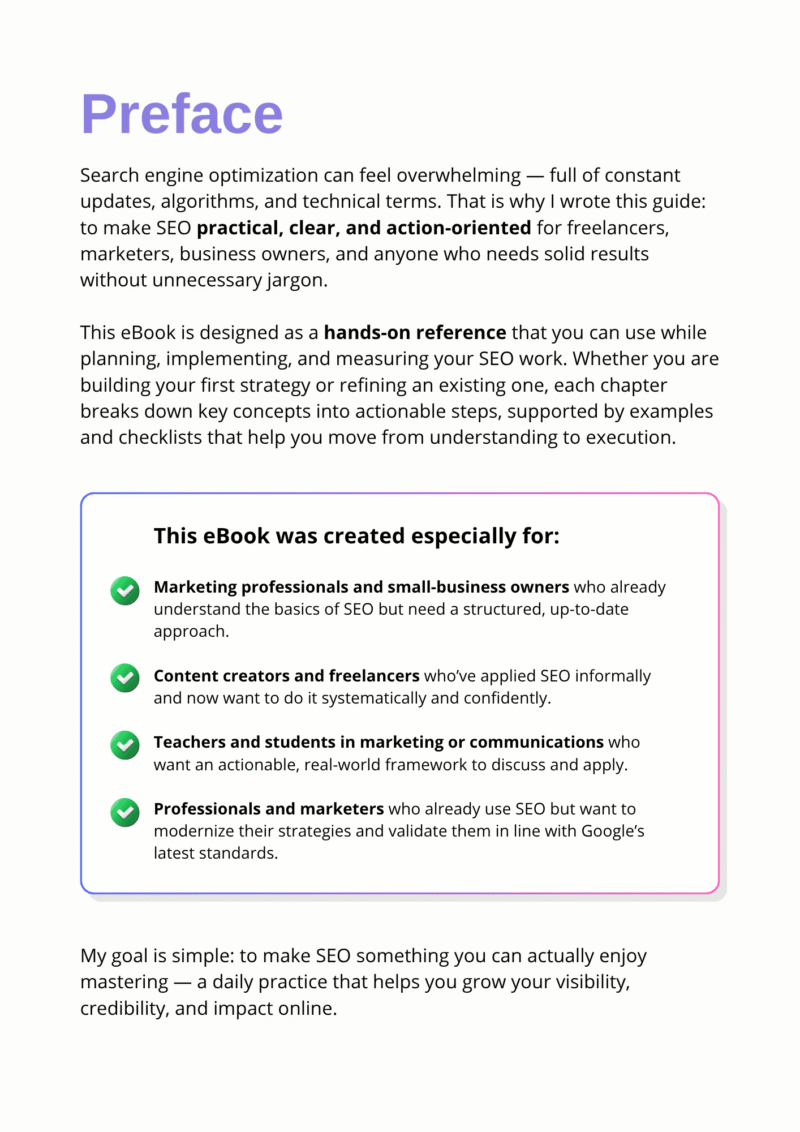
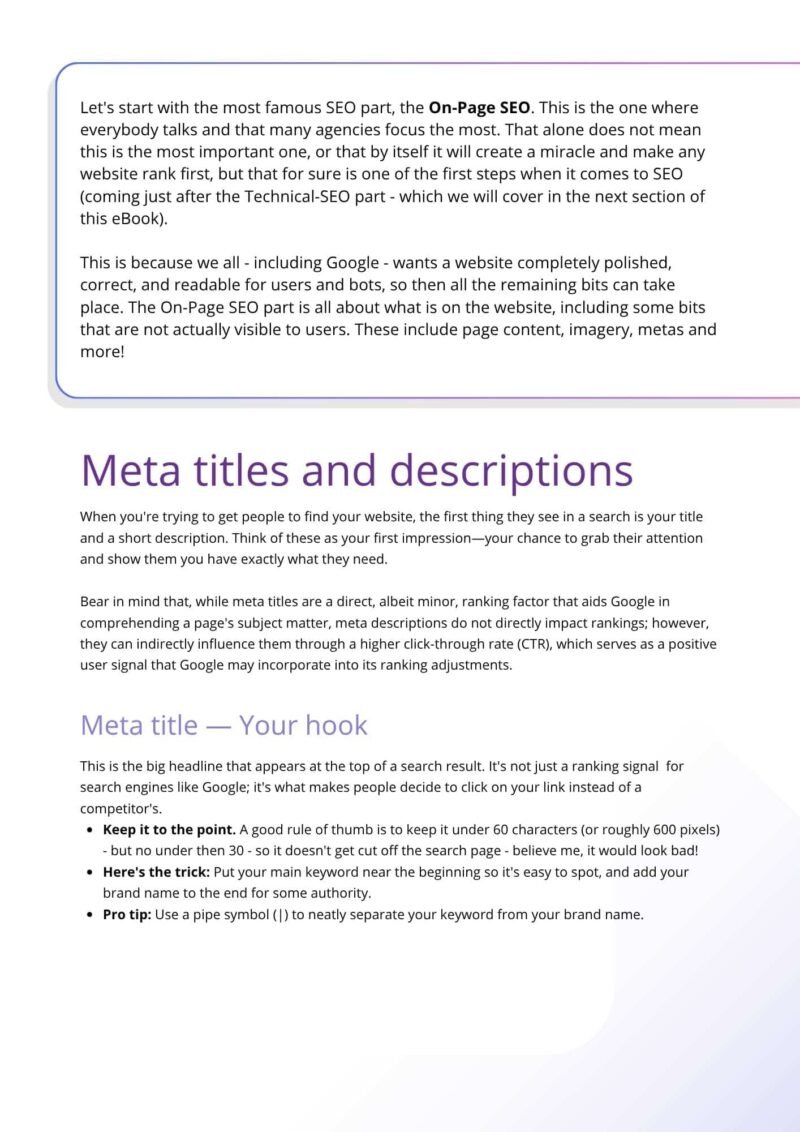
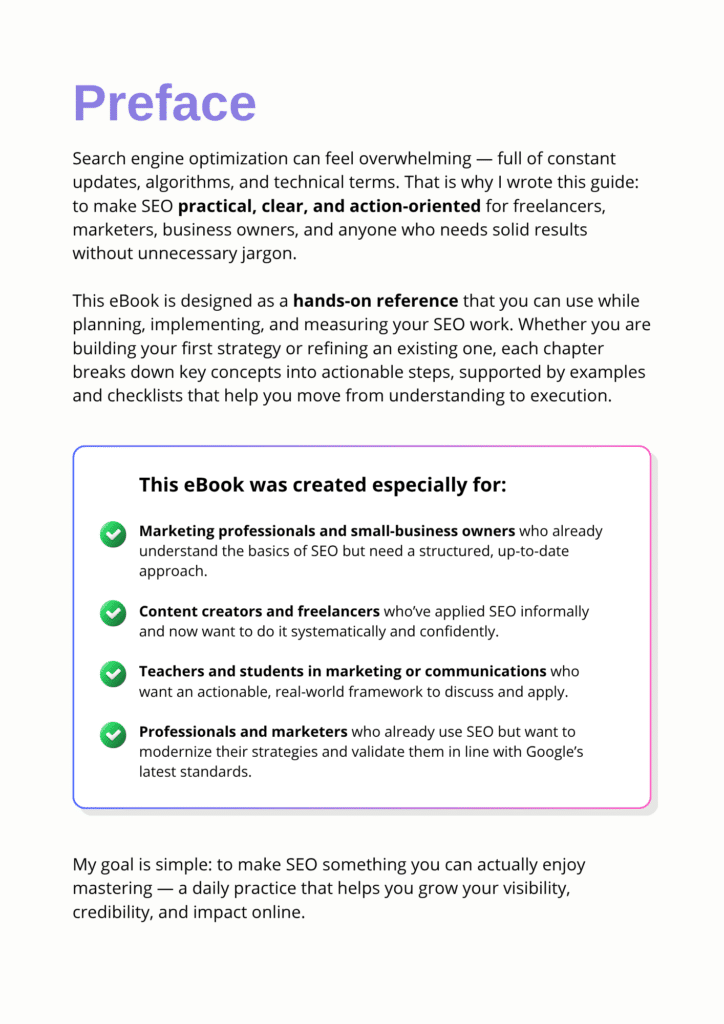
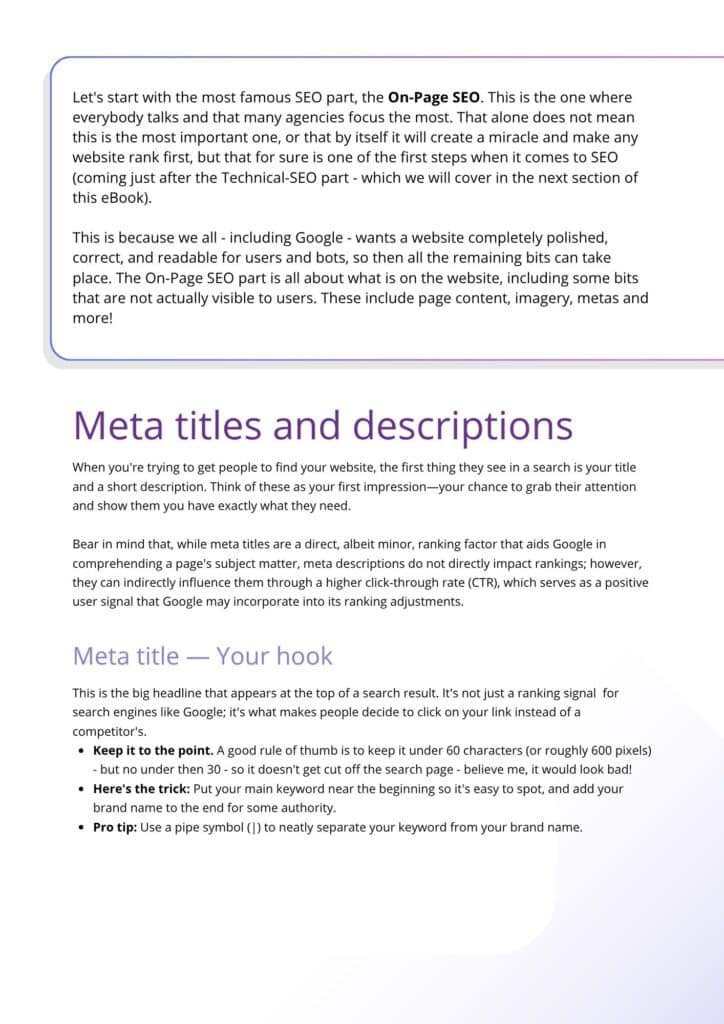
SEO in Action: Foundations to Measurable Growth
Refresh your SEO strategy with clear, actionable methods focused on WordPress websites.
Learn how to measure what matters and grow sustainably with our SEO in Action eBook.