

Writing copy that ranks on page one of Google and answers AI search systems comes down to two clear tasks: uncovering exactly what your ideal customer is searching for, and laying out your expertise in a clean semantic architecture. Let’s pull back the curtain on the digital marketing industry: many businesses spend thousands of dollars every single month on agency retainers, only to receive generic, thin content that fails to rank or attract high-quality leads. The open secret among senior technical marketers is that you do not need a massive agency or a corporate budget to dominate search engine results. You just need a repeatable, highly structured system that matches what search engines look for.
Writing copy that ranks on page one of Google and answers AI search systems comes down to two clear tasks: uncovering exactly what your ideal customer is searching for, and laying out your expertise in a clean semantic architecture.
Here is your exact blueprint to write expert, lead-generating SEO copy completely on your own.
Step 1: Mine Intent-Driven Long-Tail Keywords
If you want your writing to generate actual business revenue, you must ignore broad search terms. Targeting massive, highly competitive phrases like “SEO help” is a losing battle against giant media networks. Instead, look for long-tail keywords—phrases containing three or more words that show clear commercial intent.
- Broad Educational Query: “SEO plan” (High competition, low conversion rate).
- Long-Tail Commercial Query: “how to write seo content without an agency” (Low competition, highly targeted lead intent).
The user typing the long-tail phrase is actively looking for an immediate solution to a specific business challenge. They are far more likely to download your resources, buy your products, or sign up for your services.
To source these phrases without purchasing expensive enterprise software, leverage your own data. Go into Google Search Console, review your Performance Reports, and filter for queries where your site has high impressions but low click-through rates. These are high-value keyword opportunities that are just waiting for a dedicated, optimized page.
Step 2: Build a Clean Semantic Heading Hierarchy
Generative AI systems (like Google’s AI Overviews, Perplexity, and ChatGPT) do not scan a web page the way humans do. They read the underlying code structure to break down and summarize its core sections. To make your content completely irresistible to these engines, you must organize your ideas using a strict heading tag hierarchy.
[H1] Primary Page Title (Must contain your main long-tail search query)
├── [H2] Strategic Core Sub-Topic (Addresses the first major user issue)
│ ├── [H3] Actionable Step-by-Step Breakdown (Deep granular details)
│ └── [H3] Practical Tool Implementation (Specific tool recommendations)
└── [H2] Common Pitfalls & FAQs (Satisfies secondary semantic user intents)
By structuring your page this way, you create an effortless reading experience for mobile users while making it easy for search crawlers to scan, index, and highlight your answers as a featured snippet.
Step 3: Satisfy Google’s Strict E-E-A-T Guidelines
Google’s search systems heavily reward content that shows E-E-A-T (Experience, Expertise, Authoritativeness, and Trustworthiness). When you write your own content, you can easily outshine generic agency copy by infusing real, unmistakable human authority into every paragraph:
- Incorporate Real-World Data: Do not write in vague, abstract sentences. Share actual numbers, screenshots from your dashboard, or specific case studies from your business.
- Eliminate Conversational Fluff: Avoid robotic filler sentences like “In the modern digital landscape of today, it is highly important to consider…” Get straight to the point. State the challenge, provide the solution, and back it up with data immediately.
- Maintain High Semantic Density: Use natural variations of your primary topic’s industry terms. For example, if you are writing about content optimization, naturally include terms like search intent, core web vitals, click-through optimization, and schema markup.
Step 4: Craft Your On-Page Click-Through Engine
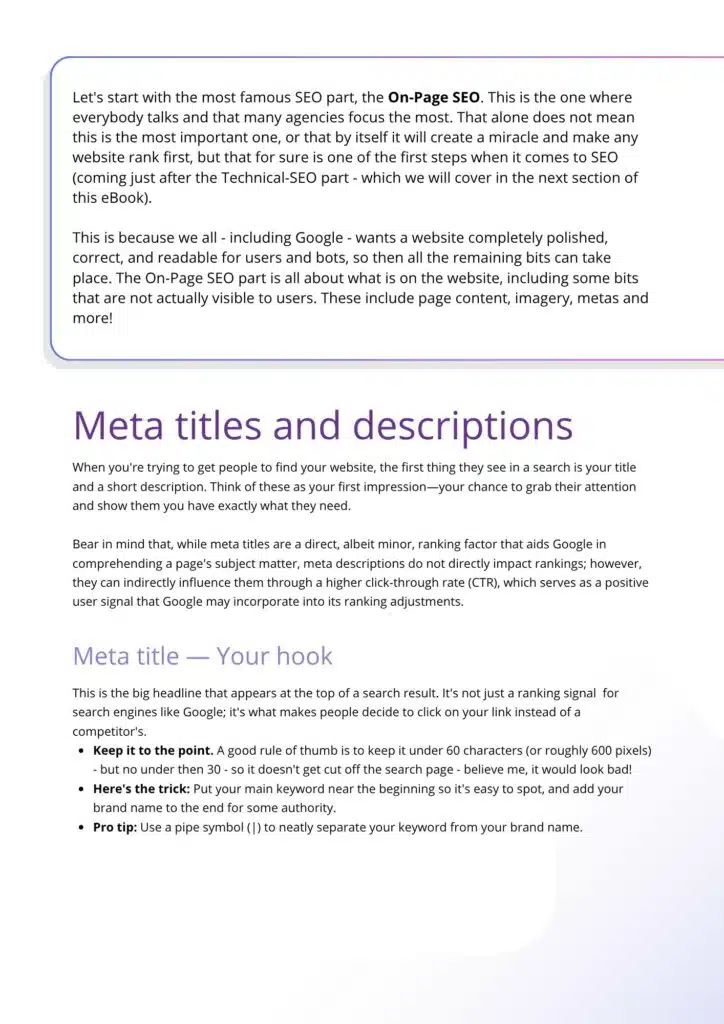
Once your content is structurally solid, you must optimize your meta tags to maximize human click-through rates from search results pages.
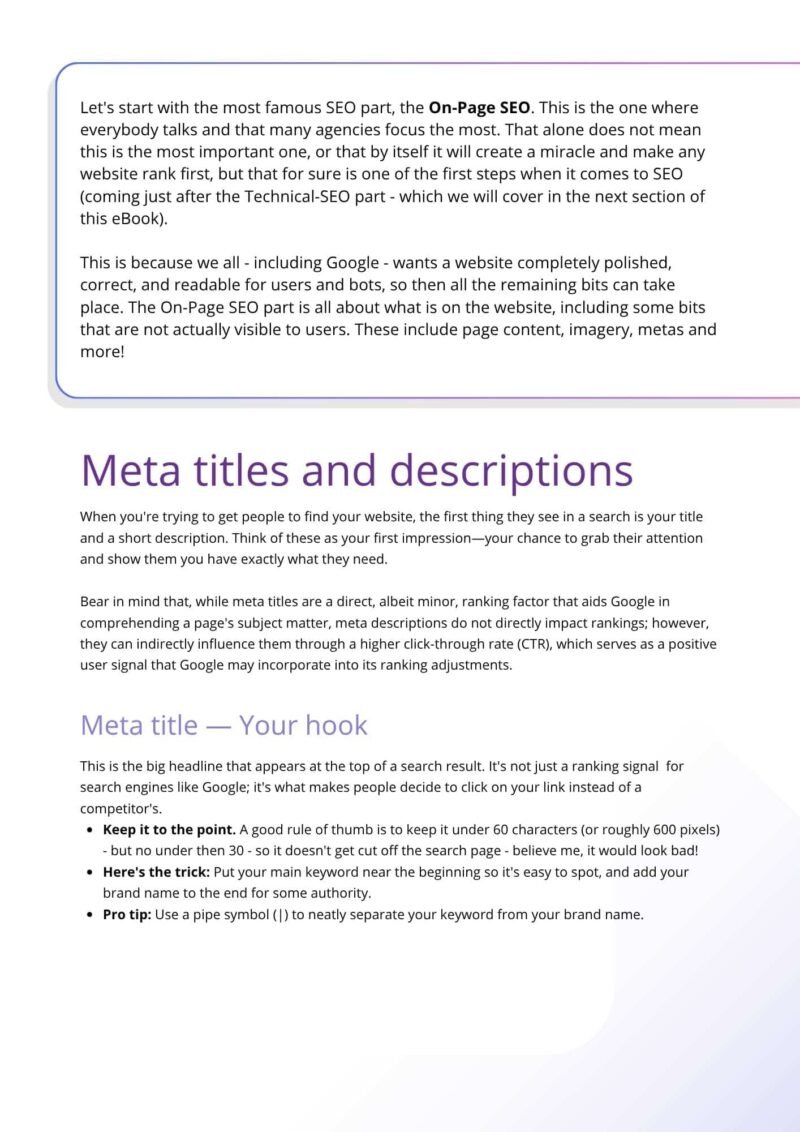
- The Meta Title Tag: Keep this under 60 characters. Place your primary long-tail keyword right at the beginning, where it catches the eye, and add your brand name at the end, separated by a clean pipe symbol (|).
- The Meta Description Tag: Treat this as a 155-character pitch for your page. Write it in an encouraging, human voice, include a secondary keyword variation, and close with an active call to action like “Get the free action plan now”.
Bypassing the Agency Retention Trap
Building a library of high-ranking content does not require an outsourced marketing team. It simply requires an organized framework that you can execute consistently. This is exactly why I published SEO in Action: Foundations to Measurable Growth. It serves as a clear, jargon-free reference guide that breaks down complex search engineering into straightforward, actionable workflows for independent business owners.
By combining the structural guidelines in the book with the dynamic tools hosted on our site, you can manage your digital footprint, map out your long-tail keyword silos, and drive highly qualified organic leads completely on your own terms.
To watch exactly how I plan out high-intent keyword structures and monitor conversion results using completely free data platforms, check out my video tutorials here:
Watch the Free Content Planning Masterclass on YouTube
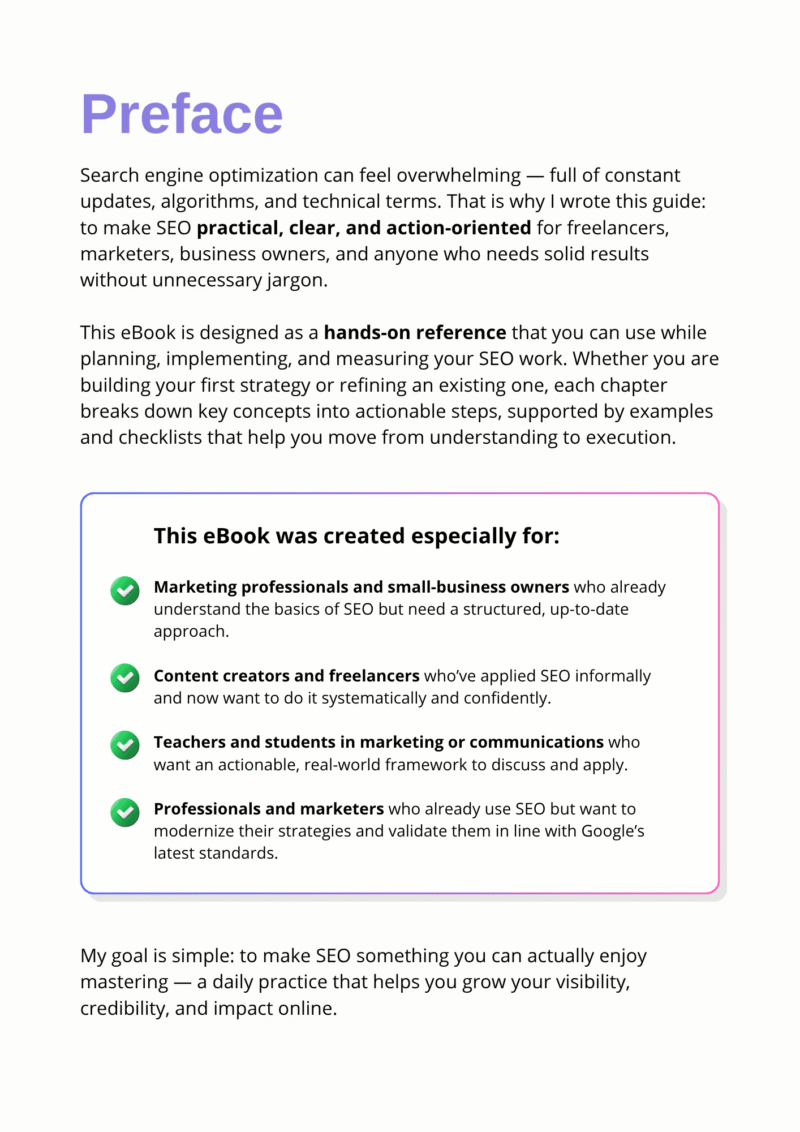
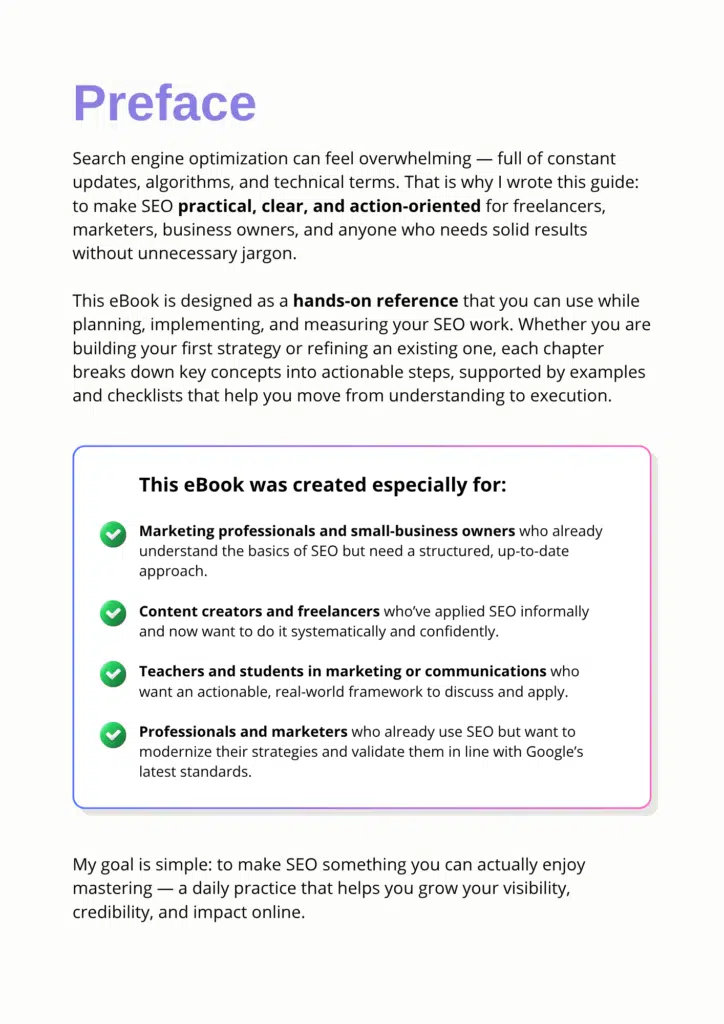
SEO in Action: Foundations to Measurable Growth
Refresh your SEO strategy with clear, actionable methods focused on WordPress websites.
Learn how to measure what matters and grow sustainably with our SEO in Action eBook.
Continue Building Your SEO Foundation
→ Free 14-Day SEO Action Plan — turn your audit into a two-week workflow
→ SEO Checklist — a complete reference for on-page, technical, and off-page SEO
→ SEO Basics Guide — understand the framework before applying the tactics
→ SEO in Action — the full step-by-step guide behind this tool
→ Free SEO Page Audit & Score Checker