
Every week someone asks some version of this question: should I buy an SEO course or just get an ebook? The answer people want is simple. The honest answer is that it depends on something most comparisons skip entirely — not the format, but how you actually learn and what you plan to do with the knowledge.
This is not a post that declares one better than the other. It is a post that helps you figure out which one is right for you, right now, based on where you are and what you are trying to do.
The Problem With Most SEO Courses
A good SEO course gives you structure, a teacher’s voice, and often a community of people working through the same material at the same time. For complete beginners who have never touched digital marketing, that scaffolding is genuinely useful. You are not just given a list of things to do — you are walked through the reasoning behind each one.
The problem is that most courses are not built for how working professionals actually learn. They are built for completion rates and course review scores. That means a lot of time spent on context, history, and theory before you get to anything you can act on. You watch a 45-minute module on how search engines were invented in the 1990s before you learn how to write a meta title.
Cost compounds the problem. Quality SEO courses from recognisable names typically start at $200 and climb quickly — some flagship programmes sit above $1,000. That is a significant commitment before you have applied a single thing. And the uncomfortable truth about online courses, across every subject, is that completion rates are low. Most people who buy courses do not finish them. Most people who do not finish them do not get results.
What a Well-Built SEO Ebook Actually Does
The case for an ebook is not that it is cheaper, though it is. The case is that it fits how SEO is actually practiced. SEO is not something you learn in a classroom and then apply. It is something you learn while doing — you read about meta titles, then immediately open your CMS and write one. You read about Core Web Vitals, then run PageSpeed Insights on your homepage. The gap between learning and doing should be as small as possible.
A well-structured ebook supports that workflow. You read the section you need, apply it, and come back for the next one when you are ready. Three months from now, when you cannot remember the difference between a 301 and a 302 redirect, you open the relevant chapter and find the answer in two minutes. You cannot do that with a video course — you would have to scrub through footage trying to find the right timestamp.
Who SEO in Action Was Written For

SEO in Action was not written to be read cover to cover in one sitting. It was written to be used — opened alongside a browser, consulted mid-task, referenced when you are stuck. Every chapter is structured around a practical output: not “here is how on-page SEO works in theory” but “here is how to audit your existing pages, what to change, and in what order.”
The people who get the most from it are typically in one of three situations. They run their own site or business and need to handle SEO without hiring an agency. They are a freelancer or in-house marketer who does not have a dedicated SEO budget but is expected to understand it. Or they have taken a course before, found it too slow or too abstract, and need something they can open and act on the same day.
If any of those describe you, an ebook is almost certainly the better fit. Use the free SEO audit tool to understand where your site currently stands before you commit to any learning path — it takes five minutes and gives you a concrete starting point.
When a Course Is the Right Choice
There are situations where a course genuinely makes more sense, and it is worth being honest about them. If you are completely new to digital marketing — not just SEO, but the entire ecosystem of how websites work, how traffic is generated, how conversions happen — a structured course with a human teacher can provide context that is hard to get from a reference guide.
Courses also make sense if you need external accountability to learn. Some people work best with deadlines, cohorts, and the social pressure of a shared learning environment. If you know from experience that you buy books and do not read them, a course with a fixed schedule might be more likely to produce results, even accounting for the higher cost and lower flexibility.
The third case is professional development with employer support. If your company is paying for your training and you need a certificate or a credential at the end, a recognised course programme makes more practical sense than an ebook, regardless of which would teach you more.
The Honest Comparison
| SEO Ebook | SEO Course | |
|---|---|---|
| Cost | $3 to $30 | $0 to $2,000+ |
| Time to complete | Read as you work — no fixed schedule | 10 to 40+ hours of structured modules |
| Practical application | Immediate — read, apply, move on | Exercises, often theoretical first |
| Reference use | Excellent — searchable, skimmable | Difficult — no easy way to scrub to the right moment |
| Community and support | Usually none | Often included — varies by programme |
| Completion rate | Higher — you read what you need | Industry average under 15% |
| Best for | Practitioners who need to implement now | Complete beginners who need full context |
The Approach That Works Best
The most effective SEO learners tend to do something simple: they combine a short free course for initial orientation with a practical ebook for ongoing reference and implementation. Google’s own Search Central documentation is genuinely excellent and completely free — it covers how Google works from the source, without any marketing agenda. Pair that with a practical ebook you will actually open while working, and you have everything you need to get started and keep moving.

The mistake to avoid is spending months consuming learning materials before doing anything. SEO rewards action and iteration far more than preparation. The person who publishes ten optimised pages while still learning will outrank the person who finishes an entire course before touching their site.
Read enough to act. Act. Learn from what happens. Repeat. That is the actual learning curve for SEO — and any resource that supports that loop, whether it is a course, an ebook, or a well-written blog, is worth your time.
Frequently Asked Questions
Is an SEO ebook enough to learn SEO properly?
What is the best way to learn SEO for free?
How much does a good SEO course cost?
Can I learn SEO without a course?
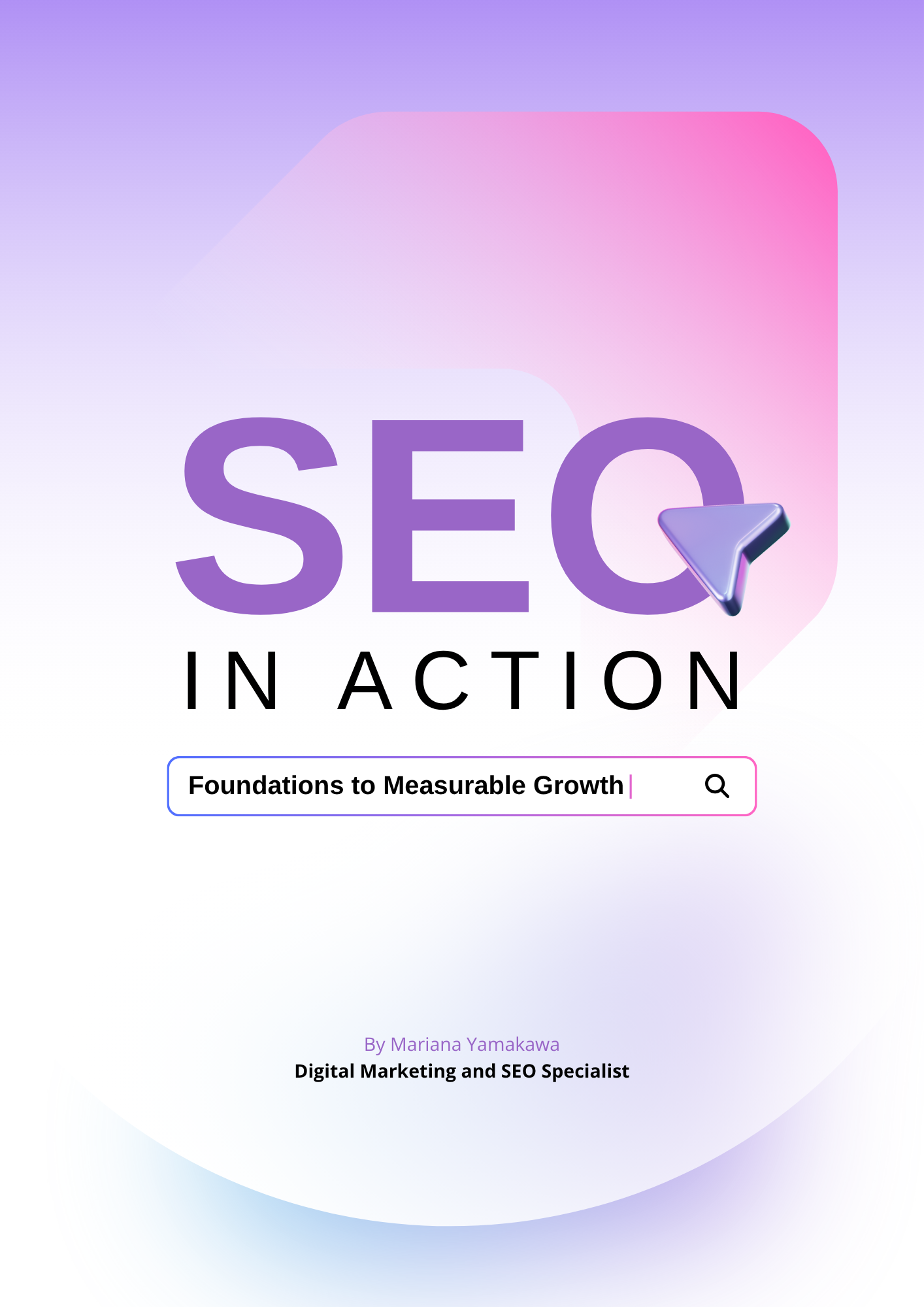
Ready to stop learning and start implementing?
SEO in Action is a practical, checklist-driven guide built to be used while you work — covering technical, on-page, off-page, and analytics from foundations to measurable results. No fluff, no theory for theory’s sake.