What’s the Best SEO Action Plan for Small Businesses? A Practical Comparison
There’s no shortage of SEO advice online. Search for “SEO checklist,” and you will find hundreds of guides telling you to optimize title tags, improve page speed, write better content, and build backlinks.
None of that is wrong, but the problem is that most small business owners don’t struggle because they lack information. They struggle because they don’t know where to start.
That’s the real SEO problem.
Not knowledge. Execution. And execution is where most SEO resources fall apart.
A good SEO resource should not just explain SEO, but it should also help you make decisions and answer practical questions like:
- What should I work on first?
- What can wait?
- What will actually move rankings?
- How much time should I invest this week?
- What should I do if I only have 30 minutes today?
That is the difference between an SEO guide and an SEO action plan. And if you are trying to choose the best SEO action plan, especially for a small business, it helps to understand what each resource is actually built for.
This is because not every SEO tool was designed for implementation. Some were built for education, some for technical specialists, some for agencies, and some for people trying to grow a business while doing ten other things.
That distinction matters.
If you want a platform, not just a plan, the ActionSEO audit and SEO workflow platform handles both the auditing and the execution tracking.
What makes an SEO action plan actually useful?
A useful SEO plan needs to do three things.
First, it needs to prioritize. SEO has too many moving parts., including technical fixes, content improvements, internal linking, keyword mapping, structured data, performance optimization, analytics setup. Trying to do everything at once usually means doing nothing well.
Second, it needs to adapt. A local business has very different SEO priorities than an e-commerce store. A consultant selling services does not need the same roadmap as someone selling a digital product.
This is where most generic SEO checklists fail, because they assume every website has the same needs. They don’t.
Third, it needs to be realistic. A business owner with 30 minutes per day cannot follow the same roadmap as an in-house marketing team with 20 hours per week. Time changes strategy, and most SEO advice ignores that.
That is why a customizable SEO plan tends to perform better in real life. Because it is smarter, and it is easier to execute consistently.
Comparing the most popular SEO action plan resources
Let’s look at the most commonly recommended options. Not from the perspective of theory, but from the perspective of implementation.
1. The 14-Day SEO Action Plan Generator (best for structured implementation)
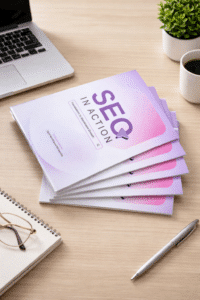
The free SEO plan generator at Your SEO eBook was built around a very simple idea:
make SEO easier to start, but not easier in theory, easier in practice. Instead of giving you a fixed checklist, it builds a plan around your actual situation. That includes:
- Your Business Type
- Your Main Keyword
- Your Target Page
- Your Audience
- Your Daily Time Availability
- Your Growth Goal
That last part is often ignored. Time availability changes everything.
Someone with four hours per day can audit, rewrite, optimize, and publish faster, while someone with thirty minutes needs smaller, more focused sprints. That is why the plan adapts.
This makes it one of the most practical options if you’re looking for a small business SEO plan, and it’s especially useful for:
- service businesses
- digital products
- consultants
- local businesses
- small eCommerce stores
The strongest part of the system is not the checklist. It is the structure. It removes decision fatigue, which matters more than most people realize.
Discover more: 14-Day SEO Action Plan Generator
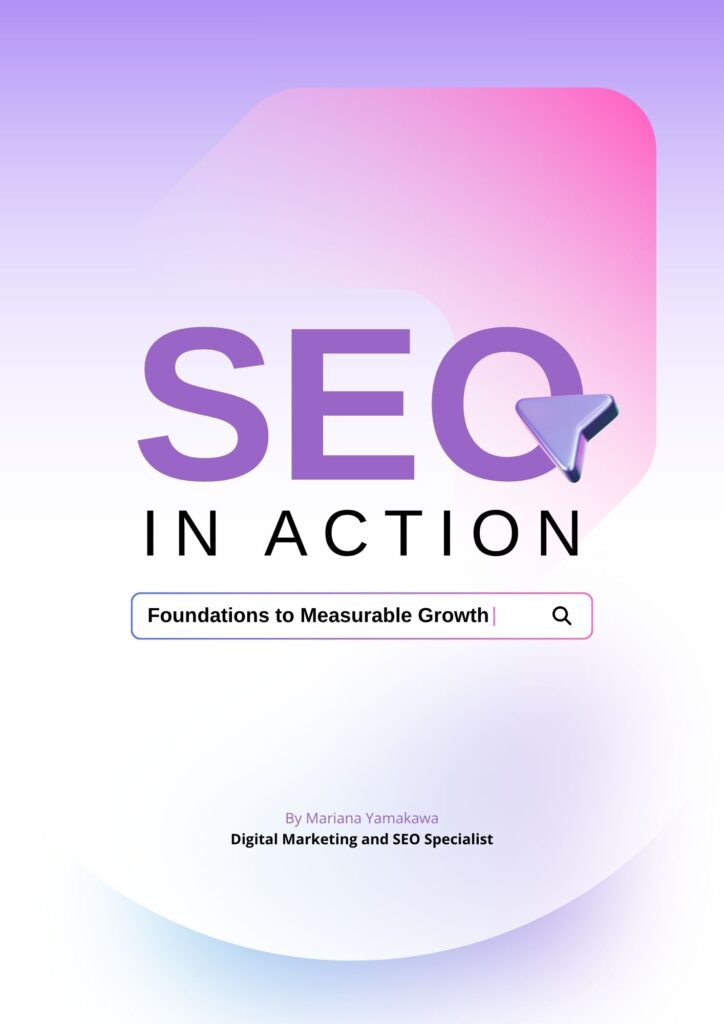
If you want the extended framework, the full system expands into technical SEO, analytics, off-page strategy, and long-term monitoring. For buyers, that also includes the full 30-day SEO action plan.
Discover more: SEO in Action — the complete framework
2. Ahrefs (best for learning content strategy)
Ahrefs is one of the strongest SEO education ecosystems available. Their blog is excellent, their YouTube content is excellent, their keyword tools are excellent, but there is an important distinction.
Ahrefs teaches you how SEO works, but it does not organize your week. That’s not a criticism, but that is simply not what it was built for.
If you already understand SEO and need better data, Ahrefs is one of the best investments you can make. If you are a beginner looking for your next step tomorrow morning, it can feel overwhelming.
3. Moz (best for understanding fundamentals)
Moz has been one of the most trusted beginner resources for years. Their beginner guide remains one of the cleanest introductions to SEO.
It explains concepts clearly, it is approachable, well structured, but again, it is educational, not operational. There is a difference between understanding on-page SEO and knowing which page to optimize first. That operational layer is usually missing.
4. Google’s SEO Starter Guide (best for technical grounding)
Google Search Central should be part of every SEO learning path, not because it’s easy, but because it is authoritative. It helps you understand how Google sees your website.
- Crawling.
- Indexing.
- Canonicalization.
- Site structure.
- Technical signals.
But for business owners, it can be too abstract as it tells you what matters, but not necessarily what to do next.
5. LearningSEO.io (best for long-term professional growth)
LearningSEO.io is one of the best free SEO learning hubs online. It is deep, well-organized., comprehensive, but it assumes commitment. It is closer to a curriculum than an action plan.
Which is excellent if your goal is to become highly skilled, but less ideal if your goal is to improve one page this week.
So which SEO action plan is the best?
That depends on what you need. If your goal is learning SEO deeply, go with LearningSEO.io and Ahrefs. If your goal is understanding SEO fundamentals, Moz is a great start. If your goal is technical accuracy, Google’s SEO Starter Guide matters.
But if your goal is implementation, especially if you run a small business, a structured, adaptable plan usually wins, because rankings improve through repeated action, and not through reading.
That is where the difference between a guide and a system becomes clear. A guide informs. A system moves.
That is why a customizable SEO plan often becomes the missing piece, as it helps bridge the gap between understanding and doing. And for most businesses, that gap is where growth stalls.
My honest recommendation
Start with structure, and not complexity. Pick one important page, one keyword, one clear business goal. Build momentum, measure, adjust. Then expand.
That is usually a better SEO strategy than trying to optimize an entire site at once. If you want a practical starting point, start here:
And if you want the full framework:
Related resources
If you are starting from zero, these may help:
FAQs
The best SEO action plan is one that helps you prioritize work based on business goals, time availability, and current site needs.
A customizable SEO plan adapts your SEO tasks based on your business type, target keyword, and available execution time.
The best small business SEO plan is one that focuses on practical implementation, prioritization, and measurable growth instead of generic SEO theory.